
Stainless Steel Electropolishing
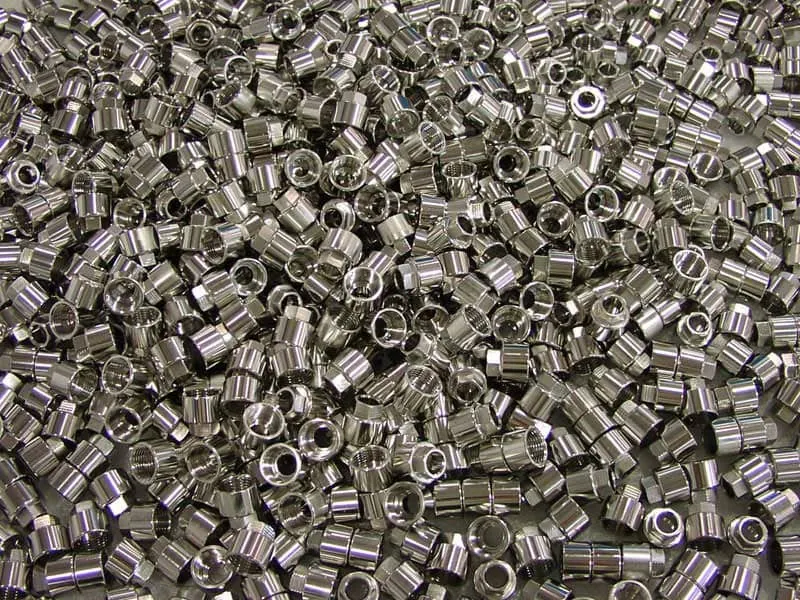
The short answer: Stainless steel is the alloy family electropolishing was made for. Every stainless steel owes its corrosion resistance to a thin chromium-oxide film, and every fabrication step damages that film. Electropolishing removes the damaged, iron-contaminated outer layer, lowers surface roughness and leaves a chromium-enriched surface whose passive film is thicker and more uniform than the mill produced. Harrison electropolishes 304, 316 and 316L, 17-4 PH, 2205 and other duplex grades to ASTM B912, SEMI F17 and F19, and ASME BPE, in Houston and on-site.
Why stainless steel responds so well
All stainless steels are iron-based alloys with at least 10.5 percent chromium. In air, the chromium forms a passive oxide only a few nanometres thick that stops further oxidation. Machining, welding, grinding and even handling embed free iron and abrasive particles in the surface and break that film locally; those are the sites where pitting, crevice corrosion and rouge begin.
Electropolishing dissolves the outer layer of metal, and because iron dissolves preferentially, the surface that remains is richer in chromium. The passive film that re-forms is thicker, more uniform and more resistant to chlorides, acids and heat. Electropolished stainless is passive as finished — ASTM B912 defines the process as a passivation method — and it is smoother, brighter and easier to clean than any mechanically polished surface of the same Ra. The benefits of electropolishing page has the numbers.
Alloys we electropolish
304 and 304L. The general-purpose austenitic grade; electropolishes to a bright, uniform finish for architectural, food, marine and general process work.
316 and 316L. The molybdenum-bearing grade used for pharmaceutical, biotech, semiconductor and marine service; the alloy behind ASME BPE and SEMI F19 finishes.
17-4 PH. Precipitation-hardening martensitic stainless used for pump shafts, valve components and aerospace parts; electropolishes well with the right process parameters.
2205 and other duplex grades. Duplex and super duplex steels used in oil and gas and chemical service; electropolished and passivated after fabrication to restore their chloride resistance.
6Mo alloys such as AL-6XN are covered on the AL-6XN page.
Standards
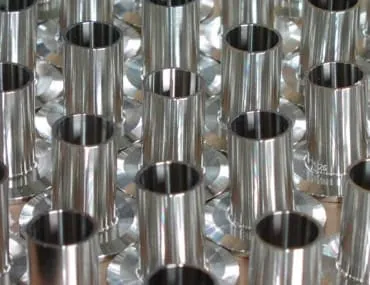
ASTM B912 — Standard Specification for Passivation of Stainless Steels Using Electropolishing. SEMI F17 — high-purity electropolished 316L tubing, tube stubs and fittings. SEMI F19 — wetted surface finishes of electropolished 316L components. ASME BPE — surface-finish designations SF4–SF6 for bioprocess equipment; see ASME BPE specifications. Harrison is ISO 9001 and ISO 14001 certified and ships a certificate of conformance with every job, with Ra readings for finish-specified work.
Mechanical finishes and how they relate
Drawings often call out a mechanical finish as the starting point. 2B is the bright cold-rolled finish produced at the mill on sheet. #4 is the general-purpose brushed finish produced with 120–150 grit abrasive, familiar from appliances and architectural panels. #8 is the mirror finish produced with successively finer abrasives and buffing. Electropolishing is applied after a mechanical finish and improves on it: a #4 surface comes out brighter and smoother with the grain still faintly visible, and a #8 or finer mechanically polished surface followed by electropolishing is how the lowest Ra values — ASME BPE SF4 and UHP semiconductor finishes — are reached. Harrison does both steps in-house.
Capacity
Four full-time electropolishing lines, four overhead cranes and 15,000 lb material-handling capacity in Houston; Harrison's own techniques for electropolishing components larger than the tanks; and field crews that electropolish installed equipment across the Houston area and the Gulf Coast. Expedited service is available and lead times vary with shop load.
Request a Quote · Call 800-245-5707
- More to Know
Frequently Asked Questions
13002 Brittmoore Park Dr
Houston, TX 77041-7231
Phone: 800-245-5707
