
Cryogenic and LNG Equipment: Cleaning, Passivation and Electropolishing
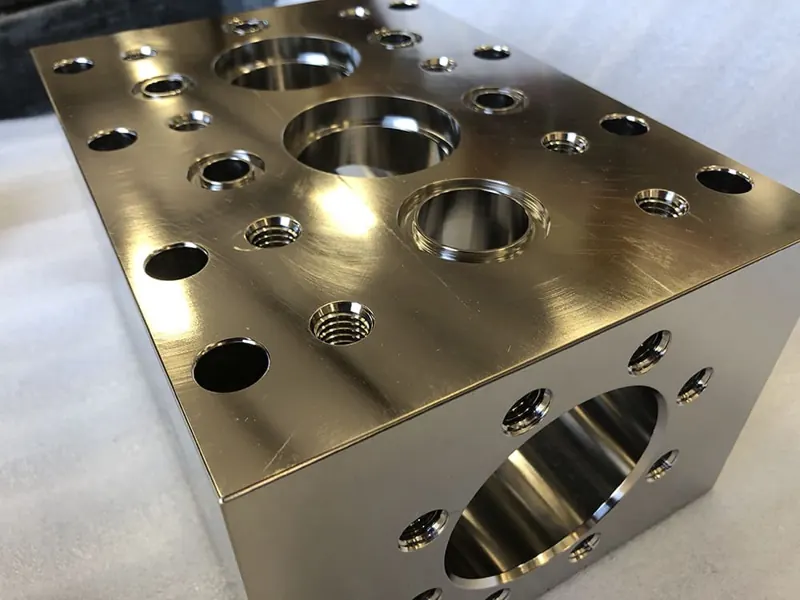
The short answer: Cryogenic service punishes surfaces. Stainless and nickel-alloy valves, heat exchangers, cold-box piping and transfer lines for LNG liquefaction, export terminals, regasification and industrial cryogenics are specified with passivated, iron-free surfaces and precision cleanliness because contamination that is harmless at ambient temperature can plug, erode or ignite at cryogenic conditions — especially where oxygen or oxygen-enriched streams are involved. Harrison brings passivation, electropolishing and oxygen-service cleaning together in one Houston facility, a short drive from the Gulf Coast LNG corridor from Freeport and Corpus Christi to Sabine Pass and Lake Charles.
Components we process
Cryogenic valves (gate, globe, ball, check) and actuator hardware · heat-exchanger cores, shells and tube bundles · cold-box piping spools and manifolds · transfer lines, loading arms and hose assemblies · vaporizer and pump components · tank fittings and instrumentation. Materials: 304/304L and 316/316L stainless, duplex, Inconel and other nickel alloys, Hastelloy, titanium, copper and brass.
Which process your component needs
Pickling and passivation after welding, machining or repair restores the chromium-oxide layer on stainless and removes the embedded iron and heat tint that start corrosion in service. Methods per ASTM A380 and A967 or AMS 2700; see citric vs. nitric passivation.
Electropolishing smooths and brightens wetted surfaces, removes burrs and the smeared surface layer from machining, and leaves a chromium-enriched surface that resists corrosion and sheds fewer particles. Specified to ASTM B912 or an Ra target; electropolishing typically reduces Ra by 30–50%.
Oxygen-service-grade cleaning to CGA G-4.1 and ASTM G93 for any component that will see oxygen, oxygen-enriched gas or a specification that borrows those cleanliness levels for cryogenic cleanliness. Verified, dried with filtered oil-free gas, capped and double-bagged in our Class 1000 cleanroom.
Many cryogenic components need two of the three. We sequence them correctly — pickle, passivate or electropolish, then clean and package — under one certificate of conformance.
Capacity for cryogenic hardware
Cold-box spools, large valves and exchanger bundles are not small. Harrison's 25,000 sq ft facility has four overhead cranes, 15,000 lb material-handling capacity and four electropolishing lines. Installed equipment at a terminal or fabrication yard can be passivated or polished on-site by our field crews in the Houston area and along the Gulf Coast.
Representative project
A cryogenic valve manufacturer supplying an LNG export terminal needed a lot of large stainless valve bodies and bonnets passivated after final machining and then cleaned to an oxygen-service cleanliness level required by the terminal's specification. Harrison passivated the components to ASTM A967, verified the passive surface, cleaned and verified them to the specified ASTM G93 level, and packaged them in the cleanroom with capped ports and double bags. Each valve shipped with a certificate of conformance covering both processes and its serial number, which the manufacturer filed with the terminal's quality package.
Request a quote for cryogenic equipment
Send the drawing or component list, alloy, quantity and specification, and tell us whether the parts need passivation, electropolishing, cleaning or a combination. We'll quote within one business day; expedited service is available and lead times vary with shop load.
Request a Quote · Call 800-245-5707
- More to Know
Frequently Asked Questions
13002 Brittmoore Park Dr
Houston, TX 77041-7231
Phone: 800-245-5707
