
Oxygen Cleaning Services for High-Purity and Oxygen-Enriched Systems
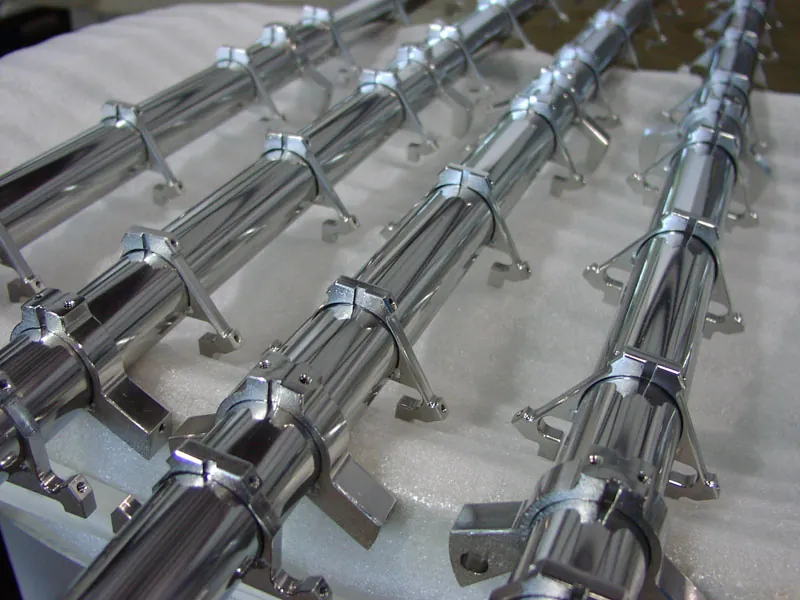
The short answer: In an oxygen-enriched system, a trace of oil, grease or particulate is fuel, and the pressure and flow of the gas can ignite it. Oxygen cleaning removes hydrocarbons, particulate and residues from every wetted surface, verifies the result by inspection, and seals the part so it stays clean until installation. Harrison cleans stainless steel, nickel alloys, aluminum, titanium, copper and brass components to ASTM G93 and CGA G-4.1 — and to MIL-STD-1330, EIGA Doc 33 or your specification — with inspection and packaging in an ISO Class 6 (Class 1000) cleanroom and a certificate traceable to the part's serial number.
Why oxygen cleaning matters
Components in high-pressure or oxygen-rich service ignite if contaminated with oils, greases or particulate; even small amounts can cause fires, explosions or system failure. Oxygen cleaning removes that risk, satisfies the regulatory and safety requirements for medical, aerospace and industrial systems, and extends component life by removing the contaminants that corrode and foul.
Standards we clean to
| Standard | Scope |
|---|---|
| ASTM G93 | Cleaning methods and cleanliness levels for material and equipment used in oxygen-enriched environments |
| CGA G-4.1 | Cleaning of equipment for oxygen service, including acceptable contamination levels |
| MIL-STD-1330 | Cleaning and testing of shipboard oxygen, nitrogen and hydrogen gas piping systems (U.S. Navy) |
| EIGA Doc 33 | Cleaning of equipment for oxygen service (European Industrial Gases Association) |
| Customer specifications | Internal and industry-specific cleanliness and verification requirements |
See ASTM G93 and CGA G-4.1 explained for what each requires and how to specify a cleanliness level.
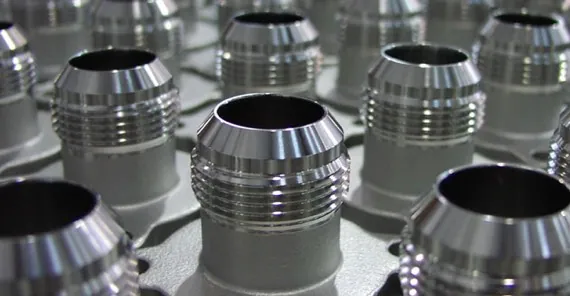
Our oxygen cleaning process
Receiving inspection. 100 percent visual examination of incoming material, and a cleaning sequence mapped to the part, which can include any of the steps below.
Acid cleaning. Removal of rust, oxides, weld scale and embedded particles.
Alkaline or solvent cleaning. Removal of oils, greases and hydrocarbons.
Ultrasonic cleaning. For intricate parts, blind passages and hard-to-reach areas.
Deionized-water rinse. 17 megohm DI water so no cleaning agent or residue remains.
Drying. Filtered nitrogen or air drying in the cleanroom.
Inspection. White-light visual inspection for residues, UV black-light inspection for hydrocarbon traces, and quantitative methods such as solvent extraction where the specification calls for them, traceable to the part's serial number.
Packaging. Vacuum-sealed in anti-static film or double-bagged in cleanroom-grade materials, sealed and pressurized where required, labeled with oxygen-cleaning certification and traceability.
Materials we clean
Stainless steel (200-, 300- and 400-series), nickel alloys, aluminum, titanium, copper and brass — as raw material, machined components or fabricated assemblies. Typical parts are valves, regulators, fittings, piping and spools, manifolds, vaporizers, heat exchangers, vessels and cryogenic hardware for industrial gas, LNG and cryogenic, aerospace, medical-gas, semiconductor and hydrogen systems.
Capacity, turnaround and certifications
Facility: 25,000 sq ft in northwest Houston, expanded and updated in 2021, with four overhead cranes and 15,000 lb material-handling capacity. ISO Class 6 (Class 1000) cleanroom for oxygen-service inspection and packaging, double-bagged and labeled per CGA G-4.1. On-site service: across the Houston area and Gulf Coast, parts too large or too fixed to transport are cleaned and packaged for oxygen service at your facility. Turnaround: expedited service is available and lead times vary with shop load; tell us your deadline and we will confirm it. Quotes go out within one business day. Hours: Monday–Friday, 7:00 AM – 5:00 PM. Quality system: ISO 9001:2015 and ISO 14001:2015 registered, with a certificate of conformance on every job and full traceability from receipt to release. Local to Houston? See electropolishing and passivation in Houston.
Request a Quote · Call 800-245-5707
- More to Know
Frequently Asked Questions
13002 Brittmoore Park Dr
Houston, TX 77041-7231
Phone: 800-245-5707
